Teams in league sports often play balanced schedules. For example, in each season of the English Premier League, each football/soccer team plays each other team in the league exactly twice - once at their home stadium, and once at the opposing stadium. That way, at the end of the season, you can merely look at the record of wins, draws, and losses to determine which teams have done the best, second best, and so on. This works because everyone has had the same opposition, so wins against that same opposition are comparable.
But what would happen if different teams played different opponents, or even different numbers of matches? This is exactly the situation in many eSports, as well as chess; individual players may play different amounts of time against completely different opponents. To compare competitors in such as situation, we can use a rating system.
Friday, 29 December 2023
Rating Systems Explained

Tuesday, 19 October 2021
Sampling, conditional probability, and random number generation
Part of the motivation behind making the course Statistics and Gambling is to infuse new applicability into introductory or intermediate probability courses. This blog post is a look at how the course is going to cover familiar probability topics with examples in games of chance, and a simulation-based (rather than theory-based) approach.
This post covers basic methods of random number generation (RNG) in R, and applying RNG to demonstrate core concepts in sampling, conditional probability, and conditional distributions. It is meant to be a very surface-level primer on the topics, just enough to give context for the deeper dives into specific games of chance.
Sunday, 11 April 2021
Wow, what are the odds? (Part 1: American Odds, Decimal Odds, and Implied Probability)
The term "odds" is slippery because it's used to mean different things in different contexts. In layperson terms, "odds" is often used as a synonym for probability. In proper statistical terms, "odds" is a function of probability, but it's not the same as probability. There are also other uses of the term "odds" in gambling contexts which are functions of a parallel concept called "implied probability". In these notes, we're going to look at some common types of odds in statistics and gambling contexts, and some of the calculations to convert between them.
Saturday, 30 January 2021
Lottery tickets, baseball cards, and the coupon collector's problem
A man, a woman, an enby, and 27 elephants walk into a bar. The bartender looks at the group of 30 and asks "What is the probability that 2 or more of you have the same birthday?".
The group proceeds to disregard twins, leap years, and building codes. They talk amongst themselves, leave a little space for the reader to calculate or guess for themselves,
Thursday, 21 January 2021
Fantasy Sports Explained
Information on fantasy sports ranges from the overly broad or impossible to apply like personal stories about how fantasy sports changed lives, to extremely narrow or short-lived like opinions on players recent performances. This article is intended to cover some of the middle ground to help you understand the basics of fantasy with a worked example of how you might choose players at the beginning of a league.
Sunday, 20 December 2020
Borel Dice Edition - Brute Forcing Experiments
Borel and Borel: Dice Edition are educational games about probability. I picked up a copy of each because I thought they would be useful in introducing some ideas of probability and gambling without the cultural baggage of better known games.
I'm biased because it's my field, but Borel has a lot more play value than most games of its kind. The dice edition, which is much easier to find, and easier to get into and play, has a set of 7 dice (four 6-sided, and one each of a 10-sided, 20-sided and 30-sided die), and a deck of 100 "experiments", like Experiment 001:
Wednesday, 30 September 2020
Review of The Theory of Gambling and Statistical Logic
There are two reasons why I read Review of The Theory of Gambling and Statistical Logic, Second Edition (2009), by Richard A. Epstein, which dictated which of the text's 440 pages I paid attention to and which I skimmed.
First, to learn more of the fundamentals of betting strategy for my current job at Sportlogiq. Second, to get material to include in a possible future Statistics and Gambling course.
Sunday, 5 July 2020
Statistics, Gambling, and Games of Chance
Wednesday, 7 August 2019
Reading questions: Struck by Lightning
Monday, 1 April 2019
Bingo analysis, a tutorial in R
I'm toying with the idea of writing a book about statistical analyses of classic games. The target audience would be mathematically interested laypeople, much like Jeffrey Rosenthal's book Struck by Lightning ( https://www.amazon.ca/Struck-Lightning-Jeffrey-S-Rosenthal/dp/0006394957 ).
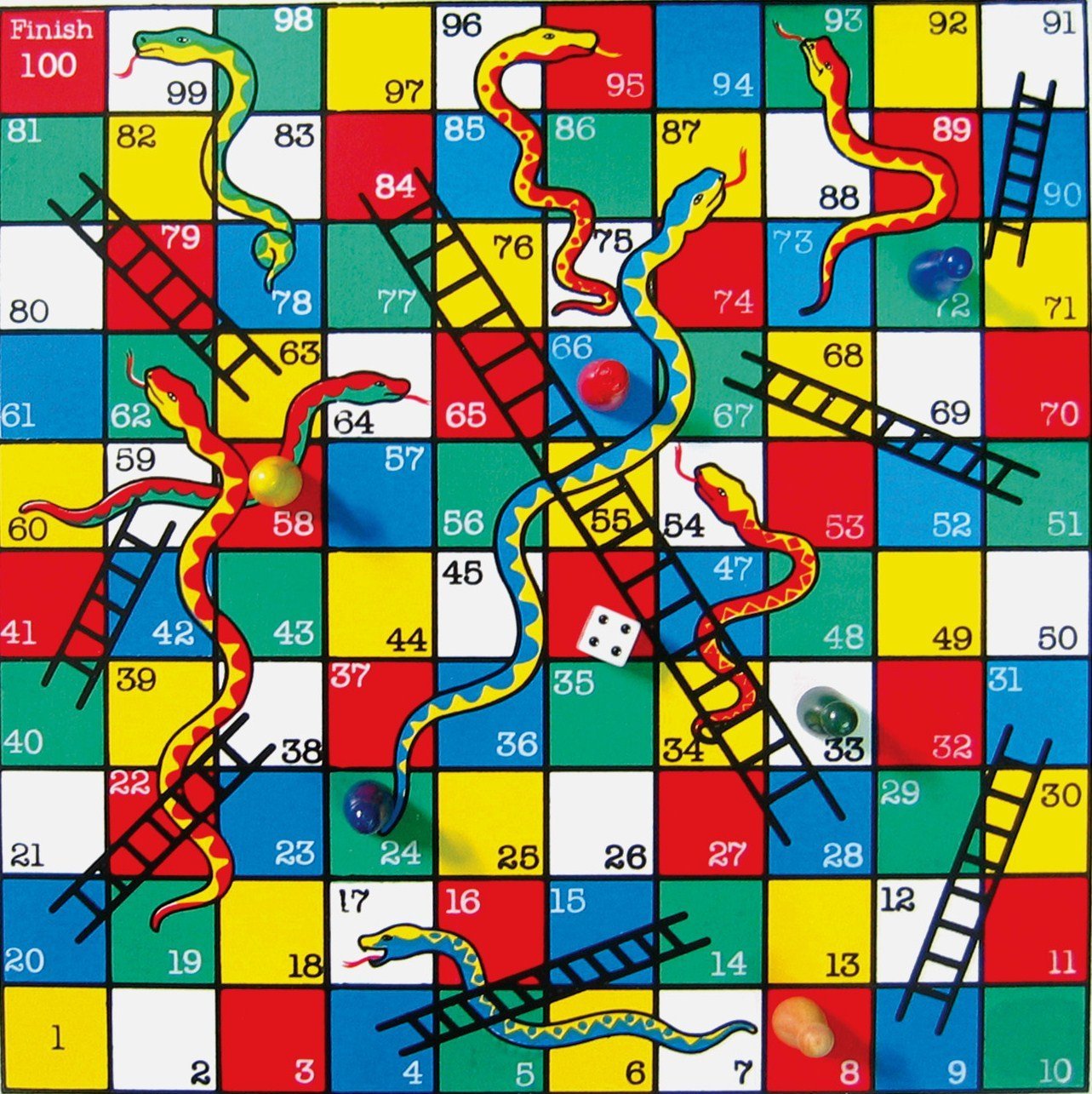
The twist would be that chapter would contain step-by-step R code or Python code so that the reader could do the same analysis and make changes based on their own questions. Material would like this post on Bingo, as well as my previous post on Snakes and Ladders ( https://www.stats-et-al.com/2017/11/snakes-and-ladders-and-transition.html ).
There would also be some work on chess variants, othello, poker, and possibly go, mahjong, and pente. Tied to each analysis could be light lessons on statistics. This Bingo analysis involves Monte Carlo style simulation, as well as notes on computing expected values, CDFs and PDFs.